How to Form an LLC as a Non-Resident
Introduction:
Starting a business in the United States is possible even if you live outside the country. For many international entrepreneurs, forming a U.S. Limited Liability Company (LLC) can provide a formal business structure for operating in the U.S. market.
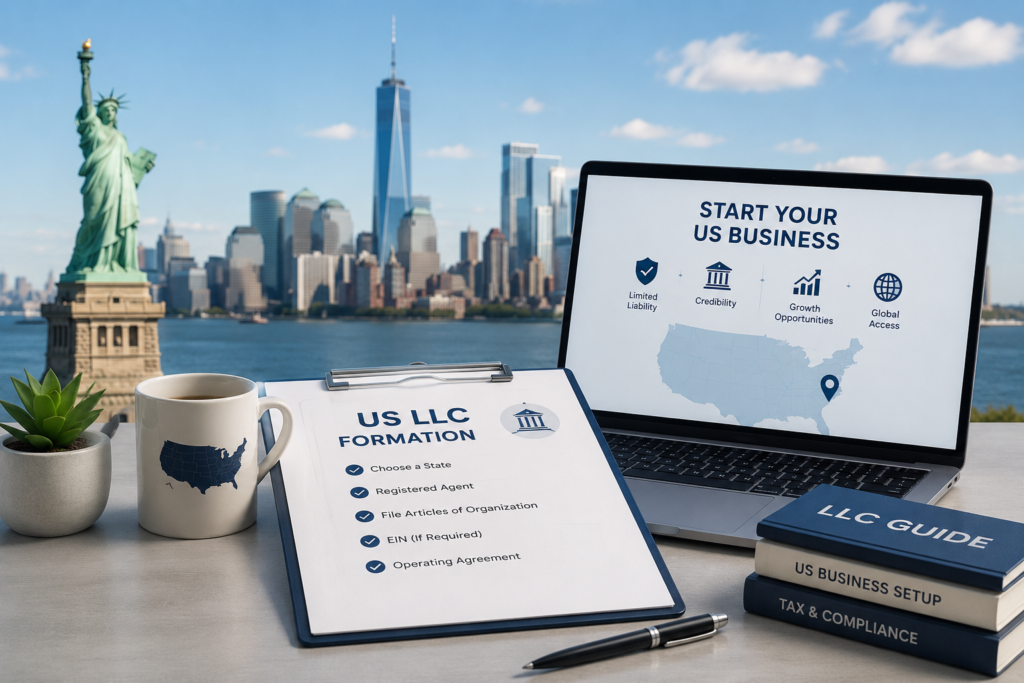
The process, however, involves more than simply choosing a state and filing paperwork. You need to select the right state, appoint a registered agent, prepare your formation documents, obtain an EIN when required, and understand your ongoing compliance responsibilities.
Here is a general overview of how the process works for non-residents.
1. Choose the Right State
The first step is deciding where to form your LLC.
Your choice should be based on factors such as your business activities, state filing requirements, ongoing fees, privacy considerations, and where you actually conduct business.
If your business operates in multiple states, additional registration or foreign qualification requirements may apply. The SBA recommends checking the requirements of each state where your business conducts activities.
2. Choose Your LLC Name
Your business name must meet the naming requirements of the state where you plan to form your LLC.
Before filing, check whether the name is available and whether it meets the state’s requirements. You should also consider checking trademark availability if you plan to build a long-term brand around the name.
3. Appoint a Registered Agent
An LLC generally needs a registered agent in the state where it is formed.
A registered agent receives official documents and legal notices on behalf of your company. The agent must be located in the state of registration.
For non-resident business owners, using a professional registered agent can make it easier to maintain a reliable U.S. contact for official documents.
4. File the LLC Formation Documents
The next step is filing the required formation document with the appropriate state agency.
For an LLC, this is commonly called the Articles of Organization, although the name can vary by state.
The information generally includes details such as:
- LLC name
- Business address
- Ownership or management information
- Registered agent information
- Other information required by the state
The exact requirements and filing fees vary by state.
5. Create an Operating Agreement
An operating agreement explains how your LLC will be structured and operated.
It can outline:
- Ownership percentages
- Member responsibilities
- Management structure
- Distribution of profits
- Voting procedures
- Procedures for adding or removing members
Even when an operating agreement is not required to file the LLC, having one can help establish clear rules for the business.
6. Apply for an EIN
An Employer Identification Number (EIN) is a federal tax identification number issued by the IRS.
Depending on your LLC’s structure and tax situation, you may need an EIN for purposes such as banking, tax filings, or hiring employees.
Importantly, a non-resident does not necessarily need an ITIN or SSN simply to obtain an EIN. Current IRS instructions state that when a foreign responsible party does not have and is ineligible to obtain an SSN or ITIN, “foreign” or “N/A” can be entered where applicable on Form SS-4.
7. Understand Your ITIN Requirements
An ITIN and EIN serve different purposes.
An ITIN is an IRS tax processing number for certain individuals who are not eligible for an SSN. The IRS states that a nonresident or resident alien who needs to file a U.S. tax return and is not eligible for an SSN may need an ITIN.
Having an LLC does not automatically mean every non-resident owner needs an ITIN. Your actual tax and filing circumstances determine whether one is required.
8. Understand Ongoing Compliance
Forming the LLC is only the beginning.
Depending on your business and state, you may have ongoing obligations such as:
- Annual or periodic reports
- State fees
- Federal tax filings
- State tax obligations
- Registered agent requirements
- Business licenses or permits
- Additional registrations where you conduct business
The requirements vary based on your business structure, activities, ownership, and location.
9. Keep Your Business Information Updated
After your LLC is established, keep your business and responsible-party information current.
The IRS requires changes to certain responsible-party information to be reported using Form 8822-B within the applicable timeframe.
Keeping your company records organized can also make future banking, tax, and compliance processes easier.
Can a Non-Resident Start a U.S. LLC From Outside the United States?
In many cases, yes. A person living outside the United States can establish a U.S. LLC without being a U.S. resident.
However, the exact requirements depend on the state, ownership structure, business activities, and the owner’s individual tax circumstances.
You should review your specific situation before choosing a structure or filing documents.
Final Thoughts
Forming a U.S. LLC as a non-resident can be a straightforward process when the required steps are handled correctly.
The key is to understand the difference between LLC formation, EIN requirements, ITIN requirements, registered agent services, and ongoing tax and state compliance.
If you’re unsure which steps apply to your situation, getting professional assistance before filing can help you avoid unnecessary delays or mistakes.


