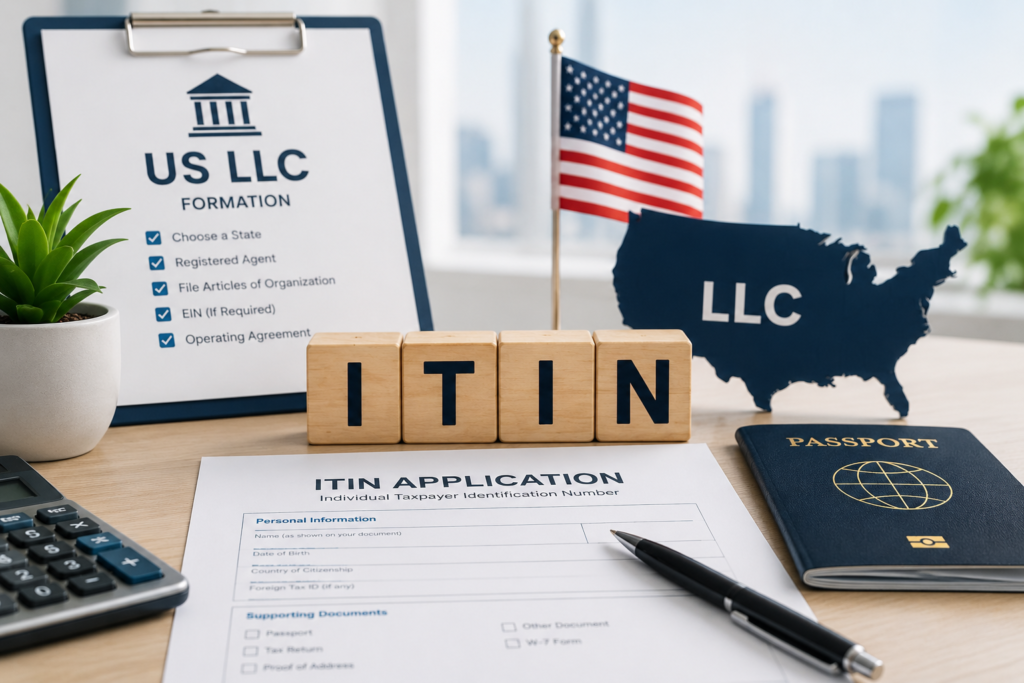
Do You Need an ITIN to Form a US LLC?
Introduction:
If you’re a non-resident planning to start a business in the United States, you may have heard that you need an Individual Taxpayer Identification Number (ITIN) before you can form a U.S. LLC.
In many situations, that’s not the case.
An ITIN is a tax processing number issued by the IRS to individuals who need a U.S. taxpayer identification number but are not eligible for a Social Security number (SSN). It is intended for federal tax purposes.
Whether you need an ITIN depends on your specific tax circumstances, not simply on whether you own a U.S. LLC.
What Is an ITIN?
An Individual Taxpayer Identification Number, or ITIN, is a nine-digit number issued by the IRS.
It allows certain individuals who are not eligible for an SSN to meet federal tax-related requirements.
The IRS states that an ITIN is for federal tax purposes only. It does not provide immigration status, authorize employment in the United States, or provide eligibility for Social Security benefits.
Do You Need an ITIN to Form a U.S. LLC?
Not necessarily.
Forming an LLC and obtaining an ITIN are separate processes.
A non-resident may be able to form a U.S. LLC without first obtaining an ITIN. Whether an ITIN is needed later depends on the individual’s federal tax situation and filing requirements.
The IRS specifically notes that an ITIN is not issued solely for purposes such as starting a business or opening a bank or investment account. There must be a qualifying federal tax purpose.
When Might You Need an ITIN?
You may need an ITIN when you have a federal tax purpose and are not eligible for an SSN.
For example, an individual may need an ITIN when they are required to file a U.S. federal income tax return or need to report income for federal tax purposes.
Your specific requirement can depend on factors such as:
- Your tax residency
- Your ownership structure
- Your income and business activities
- Whether you have a U.S. federal filing requirement
- Whether you are eligible for an SSN
- Applicable tax treaty or other circumstances
Because these factors can vary, an ITIN should not be treated as an automatic requirement for every non-resident LLC owner.
ITIN vs. EIN
An ITIN and an EIN serve different purposes.
ITIN:
An ITIN identifies an individual for certain federal tax purposes.
EIN:
An Employer Identification Number identifies a business entity or other taxpayer for federal tax administration.
The IRS explains that an individual who does not have and is not eligible for an SSN may use an ITIN for applicable individual tax purposes, while entities generally use an EIN as their federal business identification number.
So, having an EIN for your LLC does not automatically mean that you personally need an ITIN.
Can You Apply for an ITIN From Outside the United States?
Yes, eligible applicants may apply for an ITIN from outside the United States.
The IRS currently allows applicants abroad to submit Form W-7 by mail or work with an IRS-authorized Certifying Acceptance Agent or Acceptance Agent.
The application generally requires Form W-7, supporting documentation, and a federal tax return unless you qualify for an exception to the tax-return requirement.
What Documents Are Required?
Applicants need documentation establishing their identity and foreign status.
A valid passport can generally serve as a standalone document for these purposes. If you do not use a passport, the IRS requires an appropriate combination of supporting documents according to its current requirements.
Always check the latest IRS requirements before submitting your application because documentation rules can change.
How Do You Apply for an ITIN?
The general process includes:
1. Determine Whether You Qualify
First, determine whether you have a qualifying federal tax purpose and whether you are eligible for an SSN.
2. Complete Form W-7
Form W-7 is the IRS application for an Individual Taxpayer Identification Number.
3. Prepare Supporting Documents
Gather the required identity and foreign-status documentation.
4. Provide a Federal Tax Return or Qualifying Exception
Most applicants must submit a federal income tax return with Form W-7 unless they qualify for an exception.
5. Submit the Application
Depending on your circumstances, you may apply by mail, through an IRS Taxpayer Assistance Center, or through an IRS-authorized Certifying Acceptance Agent or Acceptance Agent. Some authorized agents operate outside the United States.
How Long Does an ITIN Application Take?
The IRS currently advises applicants to allow approximately 7 weeks for notification about an ITIN application.
Processing can take 9–11 weeks during tax season or when an application is submitted from overseas.
Actual processing times can vary, so applicants should avoid making plans based on a guaranteed processing date.
Does an ITIN Give You the Right to Work in the United States?
No.
An ITIN is strictly for federal tax purposes. It does not provide employment authorization, change immigration status, or provide Social Security benefits.
Do You Need an ITIN Before Forming Your LLC?
In general, you should not assume that an ITIN must be obtained before forming a U.S. LLC.
LLC formation and ITIN applications are separate processes, and your individual tax circumstances determine whether an ITIN is necessary.
If you’re forming an LLC as a non-resident, it is important to understand both your business formation requirements and your potential federal tax obligations.
Final Thoughts
An ITIN can be important for eligible non-residents who have a U.S. federal tax purpose, but it is not automatically required simply because you want to form a U.S. LLC.
Before applying, determine why you need an ITIN, whether you qualify, and what documentation and filing requirements apply to your situation.
If you’re unsure about your individual tax obligations, consider speaking with a qualified tax professional.


